© Department of Materials Science and Technology, IIT Delhi

Challenges in Multiscale Materials Modelling
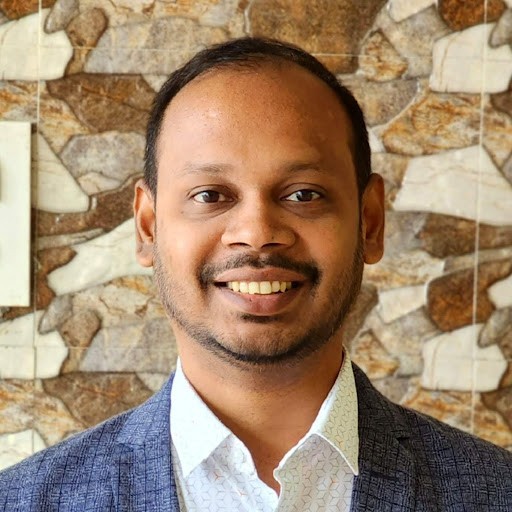
Dr . Ramachandran Sankarasubramanian
DMRL, DRDO
Abstract
Material discovery using Integrated Computational Materials Engineering involves simulations at several lengthscale. For existing material, process development has to take into account local variation of material composition. Such discovery and development using computational techniques involves localization (or local property estimation) and homogenization (effect of local variations on the entire engineering component). Evaluation of material properties (such as diffusion coefficients, defect energies) as a function of composition for engineering (multi- component) materials is still a daunting task. There are several open-ended questions than answers. This talk is aimed at providing some of the challenges in multiscale materials modelling and possible strategies to address them.
Bio
M.E. (Metallurgy) and PhD from IISc Bengaluru
Post Doc at Institute of Physics, University of Augsburg, Germany
Has been working in DMRL, Hyderabad for more than two decades
Areas of interest: Materials modelling at several lengthscales (using techniques
such as DFT , MD, MC, Phase-field, Calphad based thermo-kinetic simulations,
Crystal plasticity etc) applied primarily to Ni-based superalloys, ICME
Abstract
Material discovery using Integrated Computational Materials Engineering involves simulations at several lengthscale. For existing material, process development has to take into account local variation of material composition. Such discovery and development using computational techniques involves localization (or local property estimation) and homogenization (effect of local variations on the entire engineering component). Evaluation of material properties (such as diffusion coefficients, defect energies) as a function of composition for engineering (multi- component) materials is still a daunting task. There are several open-ended questions than answers. This talk is aimed at providing some of the challenges in multiscale materials modelling and possible strategies to address them.
Bio
M.E. (Metallurgy) and PhD from IISc Bengaluru
Post Doc at Institute of Physics, University of Augsburg, Germany
Has been working in DMRL, Hyderabad for more than two decades
Areas of interest: Materials modelling at several lengthscales (using techniques
such as DFT , MD, MC, Phase-field, Calphad based thermo-kinetic simulations,
Crystal plasticity etc) applied primarily to Ni-based superalloys, ICME
Abstract
Material discovery using Integrated Computational Materials Engineering involves simulations at several lengthscale. For existing material, process development has to take into account local variation of material composition. Such discovery and development using computational techniques involves localization (or local property estimation) and homogenization (effect of local variations on the entire engineering component). Evaluation of material properties (such as diffusion coefficients, defect energies) as a function of composition for engineering (multi- component) materials is still a daunting task. There are several open-ended questions than answers. This talk is aimed at providing some of the challenges in multiscale materials modelling and possible strategies to address them.
Bio
M.E. (Metallurgy) and PhD from IISc Bengaluru
Post Doc at Institute of Physics, University of Augsburg, Germany
Has been working in DMRL, Hyderabad for more than two decades
Areas of interest: Materials modelling at several lengthscales (using techniques
such as DFT , MD, MC, Phase-field, Calphad based thermo-kinetic simulations,
Crystal plasticity etc) applied primarily to Ni-based superalloys, ICME
© Department of Materials Science and Engineering, IIT Delhi